
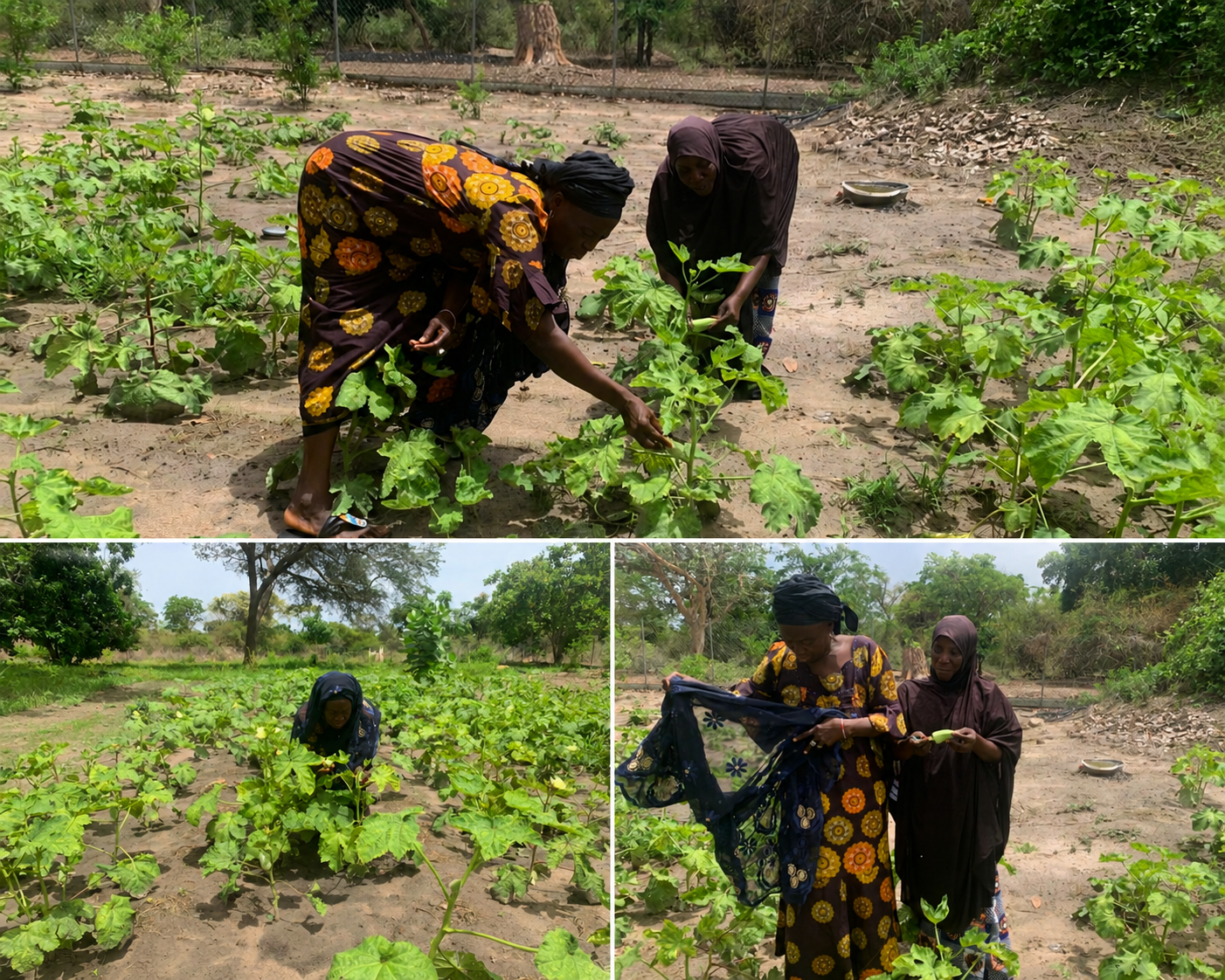
For more than 15 years, the Bunyadou Women's Community Garden in Sibanor has been a symbol of resilience, perseverance, and hope. What began as a modest initiative has evolved into a lifeline for dozens of women, enabling them to support their households despite rising living costs and increasing economic hardship.
Traditionally, gardening was considered a dry-season activity. Once the rains arrived, many women paused their farming and waited for the next dry season. But changing economic realities have forced many to rethink that pattern.
Today, the women cultivate vegetables throughout the rainy season, transforming what was once an off-season into another opportunity to earn a living.
This reporter visited the women at the Garden in June 2026 to listen to their stories.
"We finish working during the dry season, and then we just fold our hands until the next season. That does not favour us because we have families," said Sona Jarju, who has been gardening for more than 15 years.
For Sona, rainy-season farming is no longer a choice but a necessity.
She grows bitter tomatoes, okra, and spring onions, and says the income she earns allows her to pay school expenses, buy food, and reduce her dependence on relatives.
"Gardening has helped me a lot. When I harvest my crops and sell them, the money helps me provide for myself and my children," she said.
Yet every harvest comes at a cost.
The women battle pests, crop diseases, flooding, poor roads, and a shortage of farming inputs. During the rainy season, raising healthy seedlings becomes especially difficult as worms often destroy young plants before they mature.
Despite these setbacks, Sona remains optimistic.
"Last season I learned how important gardening was, so this season I am doing more than what I did last season," she said with confidence.
At the heart of the garden is Saffie Sanyang, president of the Bunyadou Women's Community Garden, who coordinates the activities of the women farmers and encourages them to remain committed despite the challenges.
For Saffie, gardening has become more than agriculture; it is a path to financial independence. "Since I started gardening, I don't go to my relatives to ask for help like before. I hustle for myself at the garden to feed my family," she said.
Around ten women currently farm during the rainy season, cultivating tomatoes, bitter tomatoes, onions, okra, peppers, and eggplants. However, they say their efforts are constrained by limited access to quality seedlings, pesticides, irrigation facilities, and farming equipment.
Most of these inputs are paid for out of their own pockets, often consuming much of the income they hope to earn. Nature, too, tests their determination. Saffie recalled how heavy rains once washed away much of their crops, wiping out months of hard work.
"The rain washed away everything, but I still didn't give up," she said. Many others shared her resilience.
For Tida Jarju, who has spent a decade cultivating vegetables, farming represents hope in difficult times. She believes hard work, rather than waiting for assistance, is what transforms lives.
"If you just sit and fold your hands, you won't get anything. But if you go and work, no matter how difficult it is, you will get something," she said.
Tida cultivates bitter tomatoes, peppers, okra, and eggplants. Like many of the women, she identifies finding suitable nursery sites during the rainy season as one of their greatest obstacles.
Even after successful harvests, the challenges continue.
To find better prices, the women transport their vegetables to markets in Brikama and Bwiam. But poor roads, high transportation costs, and low prices offered by some buyers often leave them with very little profit.
Sometimes, they say, their earnings barely cover the costs of seeds, fertiliser, labour, and transport.
For Teddy Jallow, who has been gardening for nearly 20 years, the rewards still outweigh the hardships.
She grows okra, sorrel, and green pepper, using the income to support her children's education and meet household expenses.
"The biggest challenges we face are finding a proper place for nurseries, the distance to the garden, and pests and diseases that affect our crops," she said.
Beyond food production, the garden has become a classroom for the next generation.
Young girls frequently accompany their mothers, helping with watering, weeding, transplanting seedlings, and harvesting vegetables. In the process, they learn the values of hard work, responsibility, and self-reliance.
Despite their determination, the women believe they cannot reach their full potential without greater support.
They are calling on government institutions, development partners, and agricultural organisations to assist with improved seedlings, pesticides, irrigation systems, water pipes, transportation, storage facilities, and better access to markets.
Such investments, they say, would reduce post-harvest losses and significantly improve their incomes.
For now, many continue to transport vegetables home in wheelbarrows or rely on motorcycles and any available means to reach nearby markets.
To outsiders, the Bunyadou garden may appear to be rows of vegetables stretching across fertile land.
But to the women who cultivate it, the garden represents something far greater.
It is a source of dignity.
It is economic independence.
It is the ability to provide for their children without depending on others.
It is hope planted in the soil.
Their message to other women is simple and powerful.
"Women should come out and work in the garden. Sitting at home will not change anything," Saffie urged.
As food prices continue to rise across The Gambia and household budgets come under increasing pressure, the women of Bunyadou are quietly demonstrating that resilience can begin with something as small as a seed. Through determination, hard work, and an unwavering commitment to their families, they are showing that local agriculture is more than a source of food—it is a pathway to economic empowerment, food security, and community resilience.
With every seed they sow and every harvest they gather, these women are cultivating not only vegetables but also a future rooted in hope.
Author: Kaddy Sowe
PC: Women of Buniadou
Comments (0)
No comments yet. Be the first to comment!