
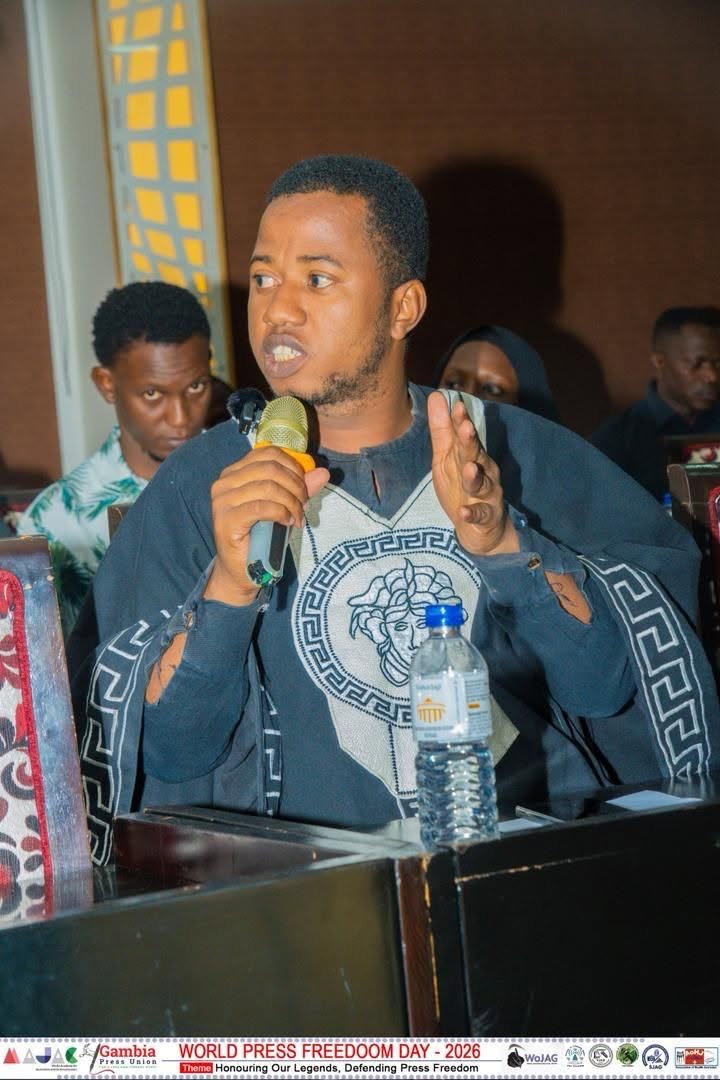
Speaking to this reporter in June, 2026, Foroyaa Newspaper journalist Yankuba Jallow believes that ending FGM will require far more than legislation. It will depend on sustained community engagement, stronger law enforcement, and public education that challenges long-held misconceptions surrounding the practice.
"FGM in The Gambia is fundamentally a cultural practice, not a religious obligation," Jallow said. "Several ethnic communities in the country have never practised FGM, yet they are no less Muslim than those who do. That alone weakens the argument that it is an Islamic requirement."
According to Jallow, the persistent belief that FGM is sanctioned by Islam remains one of the greatest obstacles to its abandonment, despite repeated clarifications from many Islamic scholars that the practice has no universal religious mandate.
Although The Gambia enacted the Women's (Amendment) Act in 2015, criminalising FGM and prescribing prison sentences and fines for offenders, Jallow argues that implementation has not matched the strength of the law.
"The legal framework is comprehensive," he explained. "The challenge lies in enforcement. Very few cases are investigated, fewer still reach the courts, and convictions remain rare. As a result, the practice continues underground despite being illegal."
The Gambia continues to record one of the highest FGM prevalence rates globally. An estimated 73 per cent of women aged 15–49 have undergone the procedure, with prevalence exceeding 80 per cent in many rural communities. Recent reports also indicate that many procedures are now carried out on infants and very young girls in an attempt to avoid detection by authorities.
Health experts warn that FGM has no medical benefits and exposes girls and women to lifelong physical and psychological consequences, including severe bleeding, chronic infections, childbirth complications, infertility, trauma, and, in some cases, death.
The legal protection afforded by the 2015 ban has also come under increasing pressure. After an unsuccessful attempt by some National Assembly Members to repeal the legislation, opponents shifted the debate to the courts, arguing that the ban violates constitutional protections for religious and cultural freedoms. The constitutional challenge has become one of the country's most closely watched legal cases.
Despite the ongoing court battle, Jallow remains cautiously optimistic that the legislation will survive judicial scrutiny.
"A small group continues to portray the ban as anti-Islam while overlooking the significant harm FGM causes to women and girls," he said. "At the same time, a broad coalition of lawmakers, civil society organisations, health professionals, and women's rights advocates remains firmly committed to defending the law."
Looking beyond the courtroom, Jallow believes lasting progress depends on transferring ownership of the fight against FGM from government institutions to local communities.
He advocates sustained grassroots education that informs families about the medical risks and legal consequences of the practice while empowering communities to reject it collectively.
"Law enforcement alone cannot eliminate FGM," he noted. "Communities must refuse to shield perpetrators, and government must invest in continuous public education rather than isolated awareness campaigns. Ending a practice that has been passed from one generation to another requires patience, resources, and consistent engagement."
For Jallow, the future of the anti-FGM movement in The Gambia will ultimately be determined not only by court rulings or legislation but by whether communities themselves choose to abandon a tradition that has endured for generations.
As the nation continues to debate the future of the law, advocates say protecting the rights, health, and dignity of girls must remain at the centre of the conversation.
This story is part of the "Breaking the Silence: Voices of FGM Survivors" podcast funded by the Foundation for Women's Health, Research and Development (FORWARD UK).
Author: Nelson Manneh
PC: Yankuba Jallow
Comments (0)
No comments yet. Be the first to comment!