
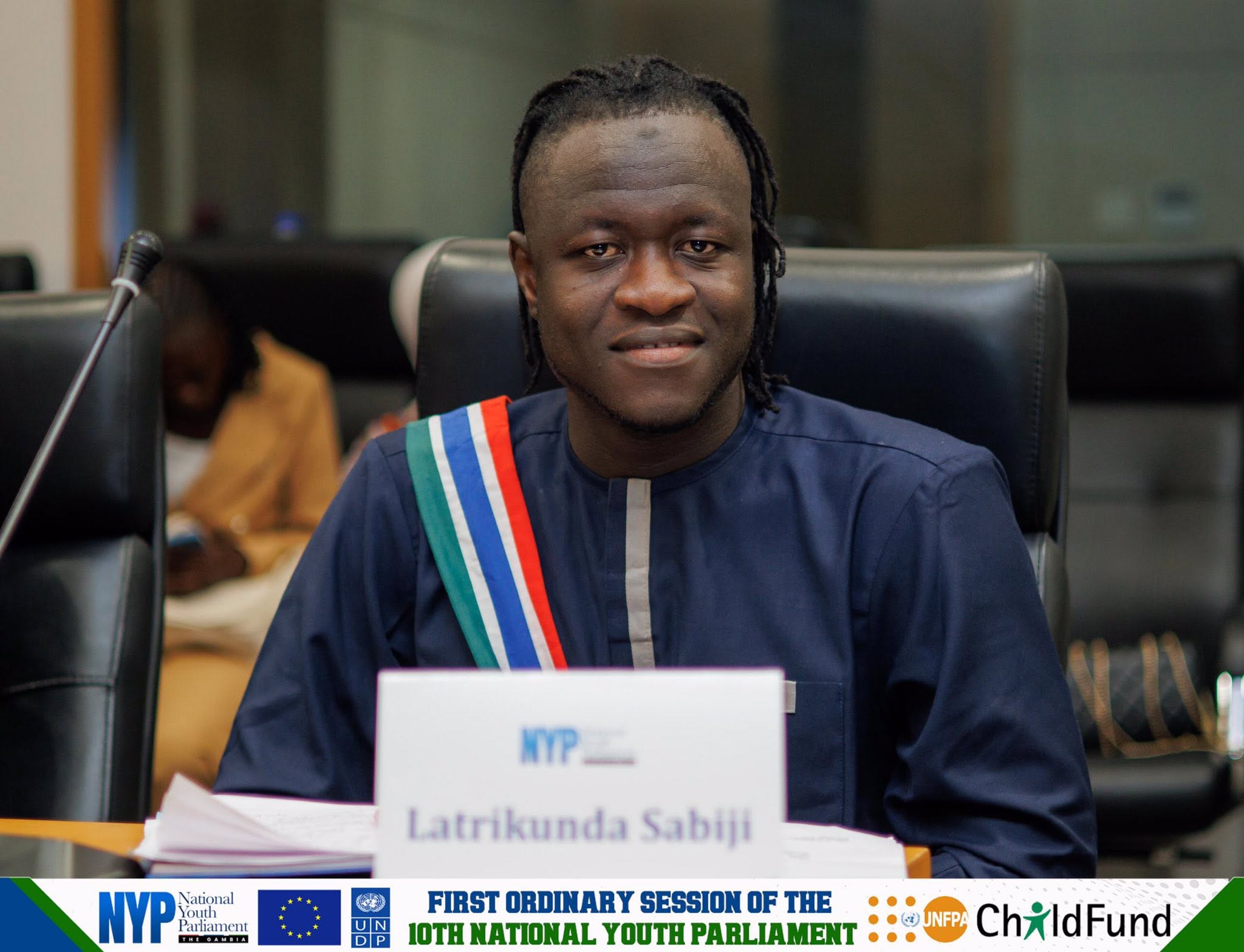
Representing Latrikunda-Sabiji Constituency, Sawaneh says protecting girls from FGM is both a public health and human rights imperative.
Speaking to this reporter in June 2026, he said, "Every girl deserves to grow up healthy, safe, and with all her rights respected. We must continue educating communities about the health risks and human rights concerns associated with FGM because lasting change happens when people understand why change is necessary."
Sawaneh believes young people are uniquely positioned to lead that transformation. He encourages Gambian youth to educate themselves, challenge misinformation with facts, engage in respectful dialogue, and support families in making informed decisions about abandoning the practice.
According to him, advocacy should not be confrontational but inclusive.
"Youth must work alongside elders, religious leaders, and community members because sustainable change comes through collaboration rather than division," he said.
He acknowledged that differing religious interpretations continue to influence public opinion, with some religious leaders maintaining that FGM existed during the time of the Prophet (S.A.W), and was never explicitly prohibited. For that reason, he said, engaging respected religious scholars and traditional authorities remains essential to promoting informed discussions within communities.
Law Must Be Matched with Community Education
While expressing strong support for legislation protecting women and girls from FGM, Sawaneh stressed that laws alone cannot eliminate the practice.
"The law should be accompanied by continuous public education, community engagement, and support so people understand why protecting girls is important," he explained. "When legislation is not backed by awareness and sensitisation, compliance becomes difficult. There is a need for sustained public engagement."
He said effective enforcement should go hand in hand with grassroots education that addresses misconceptions and builds public confidence to protect girls' rights.
Preserving Culture Without Harm
Addressing concerns that abandoning FGM would undermine African culture, Sawaneh rejected the notion that harmful practices define cultural identity. "African culture is rich and can be preserved without harming girls," he said.
He argued that cultural values such as respect for elders, discipline, unity, and moral upbringing can be celebrated through education, mentorship, traditional ceremonies, and community celebrations without cutting. "In this way, we preserve our heritage while protecting the dignity, health, and future of girls and women."
Progress Made, But More Work Remains
Sawaneh acknowledged that awareness campaigns over the years have contributed to greater public understanding of the health risks and human rights implications of FGM.
He noted that conversations surrounding the issue have become more open than in the past, although reports that some families continue the practice in secret demonstrate that significant challenges remain.
To accelerate progress, he called for expanded education through schools, community forums, and the media, while emphasising the influential role of religious and traditional leaders in shaping public attitudes.
He also underscored the importance of involving young people and women directly in advocacy efforts. "When those most affected understand the consequences of the practice, abandoning it becomes much easier," he said.
Supporting Survivors
Beyond prevention, Sawaneh emphasised the need for stronger psychosocial support services for women and girls who have already undergone FGM.
He urged both government institutions and civil society organisations to invest in counselling and community support programmes that help survivors recover from the physical and emotional effects of the practice.
Although he said FGM has not been a subject of discussion within his own family, Sawaneh explained that his engagement with communities and youth groups has reinforced the importance of respectful dialogue and listening as essential tools for social change.
A Shared Responsibility
Sawaneh also challenged fellow youth leaders and media practitioners to promote accurate information and create spaces for constructive conversations.
He encouraged young advocates to rely on medical experts, community leaders, and evidence-based information while avoiding language that alienates those they seek to persuade.
"The goal is to educate, build understanding, and inspire positive change—not create division," he said. He added that the media has a critical responsibility to amplify credible voices and facilitate informed national dialogue on the issue.
Looking to the Future
In his closing message, Sawaneh said protecting girls is essential to building a stronger and more inclusive future for The Gambia. "The future of our country depends on how well we protect and empower the younger generation, especially the girl child," he said. "Let us continue having respectful conversations, listening to one another, and working together to promote the health, dignity, and rights of every girl."
By preserving the positive values of our culture while rejecting harmful practices, we can build a healthier future for generations to come.
He believes the voices of young people will remain central to shaping that future and ensuring that every Gambian girl grows up free from violence and discrimination.
This story is part of the "Breaking the Silence: Voices of FGM Survivors" podcast funded by the Foundation for Women's Health, Research and Development (FORWARD UK).
Author: Nelson Manneh
PC: Hon. Ousainou J. Sawaneh
Comments (1)