
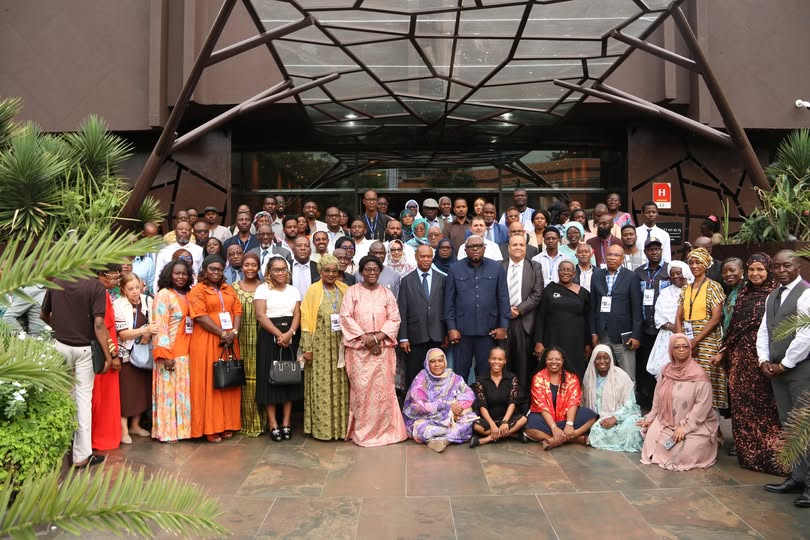
These challenges include unequal access to water and sanitation, environmental degradation, discrimination, torture, enforced disappearances, and threats against human rights defenders. The discussions underscored the need for African governments and regional institutions to translate human rights commitments into practical actions that protect human dignity, strengthen democratic participation, and ensure justice for marginalised communities.
The forum organised by the African Centre for Democracy and Human Rights Studies was themed “Ensuring Sustainable Water Availability and Safe Sanitation Systems to Achieve the Goals of Agenda 2063.”
Water Justice and Equality
Presentations of recommendations from special interest groups, moderated by Marcel Eppie, highlighted the connection between access to water and sanitation, peace, equality, and human dignity. Participants stressed that water insecurity is not only a development issue but also a human rights matter that can exacerbate conflicts, undermine livelihoods, and deepen inequalities.
Factors such as competition over shared water resources, climate change, and armed conflicts were identified as elements that can heighten tensions between communities and states. The forum called for stronger water diplomacy, responsible management of shared resources, and increased cooperation among African countries.
Participants also urged governments to ensure that refugees, internally displaced persons, and host communities have access to safe and affordable water and adequate sanitation. Special attention was given to the needs of women, girls, children, older persons, and people with disabilities, emphasising that these needs must be considered when planning and delivering essential services. Furthermore, participants stressed that communities should be involved in decisions affecting water and sanitation. Governments should make their budgets and project implementation reports accessible to the public.
Environmental Protection and Climate Justice
Environmental degradation has emerged as a significant concern, with participants discussing how mining, fossil fuel extraction, deforestation, and industrial pollution threaten access to clean water, food, healthcare, land, and livelihoods. Drawing on experiences from Sierra Leone, Zambia, Chad, Mauritania, and the Sahrawi Arab Democratic Republic, participants called for stronger enforcement of environmental laws and effective remedies for communities affected by environmental harm.
They urged African states to enhance the implementation of Article 24 of the African Charter on Human and Peoples’ Rights, which recognises the right of all peoples to a satisfactory environment conducive to their development.
Additionally, recommendations included the need for credible environmental and human rights impact assessments, greater public access to environmental information, and stronger protections for environmental human rights defenders facing intimidation, surveillance, or reprisals. Companies and investors were urged to conduct thorough environmental and human rights due diligence to ensure their activities do not infringe on community rights.
Protecting Civic Freedoms and Human Rights Defenders
The forum also explored the relationship between access to essential services and democratic participation. Participants noted that communities facing water shortages often organise to demand improved services and hold public authorities accountable. However, human rights defenders who document violations and advocate for change may face harassment, intimidation, and reprisals.
The recommendations called on states to protect peaceful demonstrations, guarantee access to water during crises, and ensure that water provision is not used as a political tool. Participants proposed strengthening national protection mechanisms for human rights defenders by 2028, establishing inclusive public consultation processes, and creating accessible, independent complaint mechanisms. The African Commission was urged to monitor civil liberties and the protection of human rights defenders when assessing states’ obligations regarding water and sanitation.
Addressing Discrimination and Protecting Vulnerable Communities
Participants highlighted the barriers faced by communities discriminated against based on work and descent. They noted that inherited social status, occupational stigma, and structural inequalities can prevent individuals from accessing essential services. Factors such as unequal public investment, affordability challenges, limited consultation, and weak accountability were identified as contributors to exclusion. The recommendations called on the African Commission, the African Union, national governments, and development partners to promote equitable public investment, improve data collection, strengthen accountability, and ensure access to justice.
Community-led monitoring and advocacy were recognised as important tools for ensuring that marginalised groups can participate in decisions affecting their lives and are not excluded from public services. Discussions regarding indigenous peoples also highlighted concerns about forced evictions, the loss of traditional livelihoods, and displacement linked to environmental degradation and conservation activities. Participants called for the recognition of indigenous knowledge, protection of ancestral lands, and respect for the principle of free, prior, and informed consent.
Ending Torture and Enforced Disappearances
The forum underscored the need to protect the rights and dignity of individuals held in prisons, police cells, military detention facilities, and other places of detention. Participants called for improved access to safe water, sanitation, and healthcare, along with measures to address overcrowding, prevent torture and ill-treatment, and strengthen independent monitoring. They also recommended establishing confidential complaint mechanisms, ensuring access to lawyers and independent medical examinations, providing protection against reprisals, and ensuring accountability for deaths in custody and other violations.
Another significant concern raised was enforced disappearance, which participants described as a persistent and often underreported human rights challenge across Africa. The recommendations urged African states to ratify the International Convention for the Protection of All Persons from Enforced Disappearance without reservations and to criminalise enforced disappearance as a distinct offence without a statute of limitations. Participants further emphasised that families of disappeared persons must have access to truth, justice, and reparation.
They proposed establishing a permanent Special Interest Group on enforced disappearances within the NGOs Forum and requested the African Commission to adopt a dedicated resolution on the issue. Stronger cooperation between African and United Nations human rights mechanisms was also encouraged to improve prevention, accountability, and protection for victims and their families.
Turning Recommendations into Action
As the forum concluded, participants emphasised that the success of human rights commitments relies on their effective implementation.
They called for recommendations that identify responsible institutions, establish clear priorities, set measurable targets, and include timelines for monitoring progress. Women were recognised as crucial contributors to water governance, not only because they are disproportionately affected by water insecurity but also as engineers, technical professionals, and leaders capable of shaping sustainable solutions.
The discussions reinforced the need for stronger cooperation between civil society organisations and the African Commission to ensure that the concerns of affected communities inform regional human rights policies and actions.
Ultimately, the final day of the NGO Forum brought together a wide range of human rights priorities under a common call for justice, equality, and accountability. Participants urged African governments and institutions to move beyond mere commitments and deliver meaningful change, addressing issues such as access to water and sanitation, protecting civic freedoms, combating environmental harm, preventing torture, and ending enforced disappearances.
For communities across the continent, the true measure of progress will be whether these recommendations lead to stronger protections, greater inclusion, and improved access to justice and essential services. The challenge now is to translate the forum's deliberations into sustained action that safeguards the dignity and rights of every individual.
Author: Halimatou Ceesay
Comments (0)
No comments yet. Be the first to comment!