
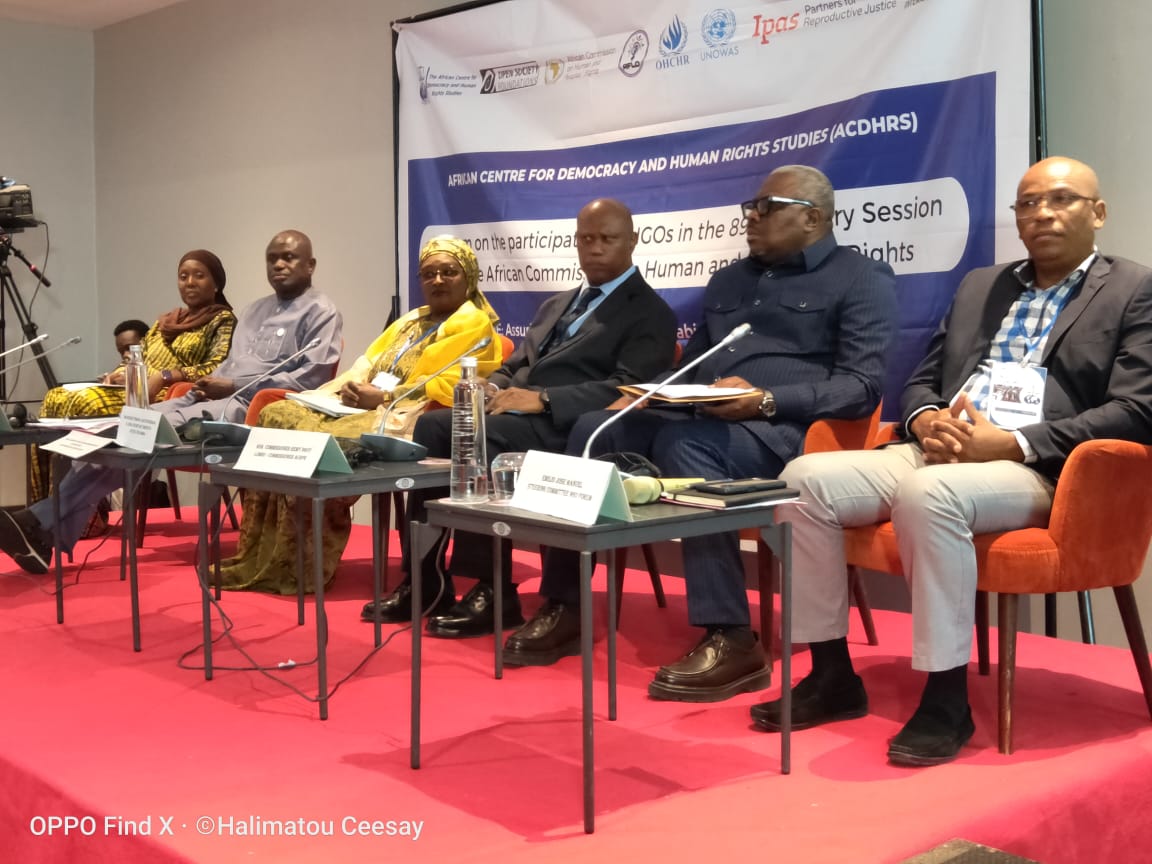
The closing ceremony, held on October 10, 2026, brought together representatives from the African Centre for Democracy and Human Rights Studies (ACDHRS), the NGO Forum Steering Committee, various civil society organisations, the Senegalese host community, and the African Commission.
Speakers reflected on the discussions and recommendations that emerged from the Forum, expressing gratitude to the organisers and partners while emphasising the importance of sustaining cooperation beyond this gathering. A common message emerged throughout the remarks: protecting human rights requires solidarity, accountable institutions, meaningful participation, and sustained efforts to ensure that no community is left behind.
African Commission Urges Action Beyond Commitments
Delivering the closing statement on behalf of the President of the African Commission, Commissioner Remy Ngoy Lumbu, Special Rapporteur on Human Rights Defenders and focal point on reprisals, reaffirmed the essential role of civil society in Africa’s human rights framework. He commended the Forum for providing a platform where organisations could share experiences, voice concerns, and contribute to the work of the African Commission. The Commissioner noted that the 40th anniversary of the African Charter on Human and Peoples’ Rights presents an opportunity to reflect on the progress made in protecting human rights across the continent, as well as the challenges that remain.
He emphasised that the effective protection of rights depends on translating regional standards and commitments into national legislation, public policies, institutional practices, and accessible remedies. Moreover, he highlighted the importance of safeguarding civic space and ensuring that human rights defenders can exercise their freedoms of expression, association, and peaceful assembly without fear of intimidation or reprisals. The Commissioner encouraged participants to maintain their engagement with the African Commission, present their recommendations clearly, and continue building on the partnerships established during the Forum. He concluded by officially closing the NGO Forum, marking the end of the three-day gathering in Dakar.
The Gambia Calls for Inclusive and Accountable Water Services
At the closing ceremony, Hussein Thomasi, the Solicitor General and Legal Secretary of The Gambia’s Ministry of Justice, delivered remarks on behalf of the Minister of Justice. He reaffirmed that access to safe water and adequate sanitation is essential for human dignity, equality, public health, and the effective enjoyment of human rights. Thomasi highlighted the disproportionate impact of water insecurity on women and girls, children, persons with disabilities, older people, and rural communities. He stressed that water and sanitation services must be physically accessible, affordable, and inclusive. Furthermore, he emphasised that women should be recognised not only as beneficiaries of these services but also as decision-makers, technical professionals, and community leaders.
He pointed out the importance of having effective legal frameworks, accessible remedies, accountable institutions, and meaningful participation from civil society in monitoring public services. For Thomasi, the success of the Forum should be measured by the practical changes its recommendations produce, rather than focusing solely on the discussions. His statement reinforced a central theme of the gathering: governments must ensure that human rights commitments are reflected in laws, budgets, policies, and services that address the needs of the people.
Solidarity is Essential in Protecting Human Rights
Hon. Teneng Mba Jaiteh, a member of the ACDHRS Governing Council, described the Forum as a vital opportunity to examine the human rights situation in Africa and strengthen collective responses to violations.
Reflecting on the discussions, she noted a wide range of concerns, including shrinking civic space, restrictions on human rights defenders, democratic governance, the rights of women and girls, digital transformation, water security, sanitation, and climate justice. Jaiteh emphasised that the challenges faced by human rights defenders cannot be treated as isolated incidents; solidarity across the human rights community is crucial. She pointed out that attacks on one defender impact the broader community working to promote justice and accountability.
Her remarks also stressed the importance of ensuring that vulnerable and marginalised groups have a meaningful voice in decisions that affect their lives. Women, children, persons with disabilities, people with albinism, and communities facing discrimination based on work and descent must be included in efforts to strengthen human rights protection. She called for the Forum’s recommendations to guide practical action at continental, regional, and national levels, ensuring that discussions lead to tangible improvements for affected communities.
Sustaining Partnerships Beyond Dakar
Emilio José Manuel, speaking on behalf of the NGO Forum Steering Committee, emphasised the importance of gathering civil society representatives from various parts of Africa and beyond. The forum provided an opportunity for participants to exchange experiences, learn from one another, and build relationships around shared human rights concerns. However, the significance of the forum extends beyond the three days of discussions.
His remarks underscored the necessity of maintaining the connections established in Dakar and strengthening cooperation among organisations that work in different contexts but pursue common goals. For civil society, ongoing collaboration is essential for sharing knowledge, amplifying concerns, and developing collective responses to the challenges faced by human rights defenders and communities across the continent.
Senegal’s Experience: Water Access and Shrinking Civic Space
Sidi Gassama, the Executive Director of Amnesty International Senegal, welcomed the participants to Senegal and highlighted the importance of the forum as a platform for African civil society to reflect on shared challenges. He specifically addressed two critical issues: access to safe drinking water and the shrinking of civic space. Both topics were central to the forum's discussions, reflecting the close relationship between access to essential services, human dignity, and the ability of citizens to exercise their rights.
Discussions on water security revealed how inadequate services disproportionately affect vulnerable communities, while concerns about the reduction of civic space pointed to the challenges faced by those striving to organise, express their concerns, and hold authorities accountable. Gassama’s remarks connected these regional issues to the realities faced by communities in Senegal and across Africa, reinforcing the need for sustained advocacy, cooperation, and accountability.
Women and Girls Must Be Central to Water Justice
Aminata Fall Niang, President of the Association of Senegalese Jurists, urged that the recommendations from the forum lead to practical improvements in people’s lives. She highlighted the disproportionate burden that water collection and inadequate services impose on women and girls, affecting their education, health, livelihoods, and participation in public life.
When access to safe water is limited, the repercussions extend beyond household needs. The time and effort required to secure water can hinder opportunities for education, income-generating activities, and civic engagement, thereby reinforcing existing inequalities. Fall Niang called on states to translate their commitments into concrete actions, accessible services, and adequate budgets.
She also urged the African Commission, national institutions, and partners to maintain dialogue with women’s organisations and support their involvement in human rights protection mechanisms. She emphasised that civil society organisations must continue to mobilise, share information, and document violations even after the forum concludes. Her message highlighted the importance of recognising women not just as beneficiaries of public services, but as active participants in shaping the policies and decisions that affect their rights.
Civil Society Sustainability Under Pressure
During the vote of thanks, Uju Agamu, Executive Director of the Prisoners Rehabilitation and Welfare Action (PRAWA), emphasised the importance of maintaining the relationships and collective commitment that have been strengthened through the NGO Forum. She highlighted two major challenges facing civil society organisations: the shrinking civic space and declining financial resources. While these organisations play a crucial role in documenting violations, supporting affected communities, and holding institutions accountable, their ability to carry out this work relies on an environment where they can operate freely and access sustainable resources.
Agamu urged both governments and the private sector to consider how they could support the sustainability of civil society, improve organisational capacity, and ensure that human rights organisations have the necessary resources to continue their work effectively. Her remarks underscored the need for more than just expressions of support.
Civil society organisations require consistent engagement, adequate resources, and an enabling environment to fulfil their responsibilities. She called for continued resilience, coordination, and collective action to advance human rights across Africa.
As the African human rights community moves beyond Dakar, the challenge remains to transform solidarity into sustained action, commitments into accountability, and human rights principles into everyday realities for everyone.
Author: Halimatou Ceesay
Comments (0)
No comments yet. Be the first to comment!