
The nomination process, held at the IEC headquarters on November 3 and 4, has provided an opportunity for aspirants to present their political ambitions and propose solutions to some of the country's pressing challenges.
Among those who submitted their applications was Salieu Jallow, an Independent Candidate, who presented his presidential nomination application on Tuesday, November 3.
Jallow said his decision to contest the presidency was motivated by a desire to improve the living conditions and livelihoods of Gambians, identifying the high cost of living, corruption and low wages as major concerns requiring urgent attention.
“I am a young Gambian. I applied as an aspirant president because I want to improve the lives and livelihoods of all Gambian citizens,” he said.
However, Jallow did not submit the required D1 million deposit during the application process.
On Wednesday, November 4, Democratic Party (DP) leader Yusupha A. Dumbuya also began his nomination process, accompanied by supporters.
Dumbuya completed the submission of his nomination documents, although he did not tick the Grade 12 certificate requirement.
Speaking to journalists, he outlined constitutional reform, electricity disruptions and the high cost of rent as some of the issues he intends to address if elected.
A key proposal in his agenda is to amend the Constitution to introduce a two-term limit for presidents, a measure he believes would strengthen democratic accountability and prevent prolonged stays in power.
He also pledged to introduce measures to regulate and subsidise rental costs while expanding access to education.
“My agenda is for the poor people. If I am elected into power, I will first of all create a law to control and subsidise the high cost of rent in this country. I will also create free education for all,” Dumbuya said.
Touray Makes a Bid for the Presidency, Promises Women's Empowerment
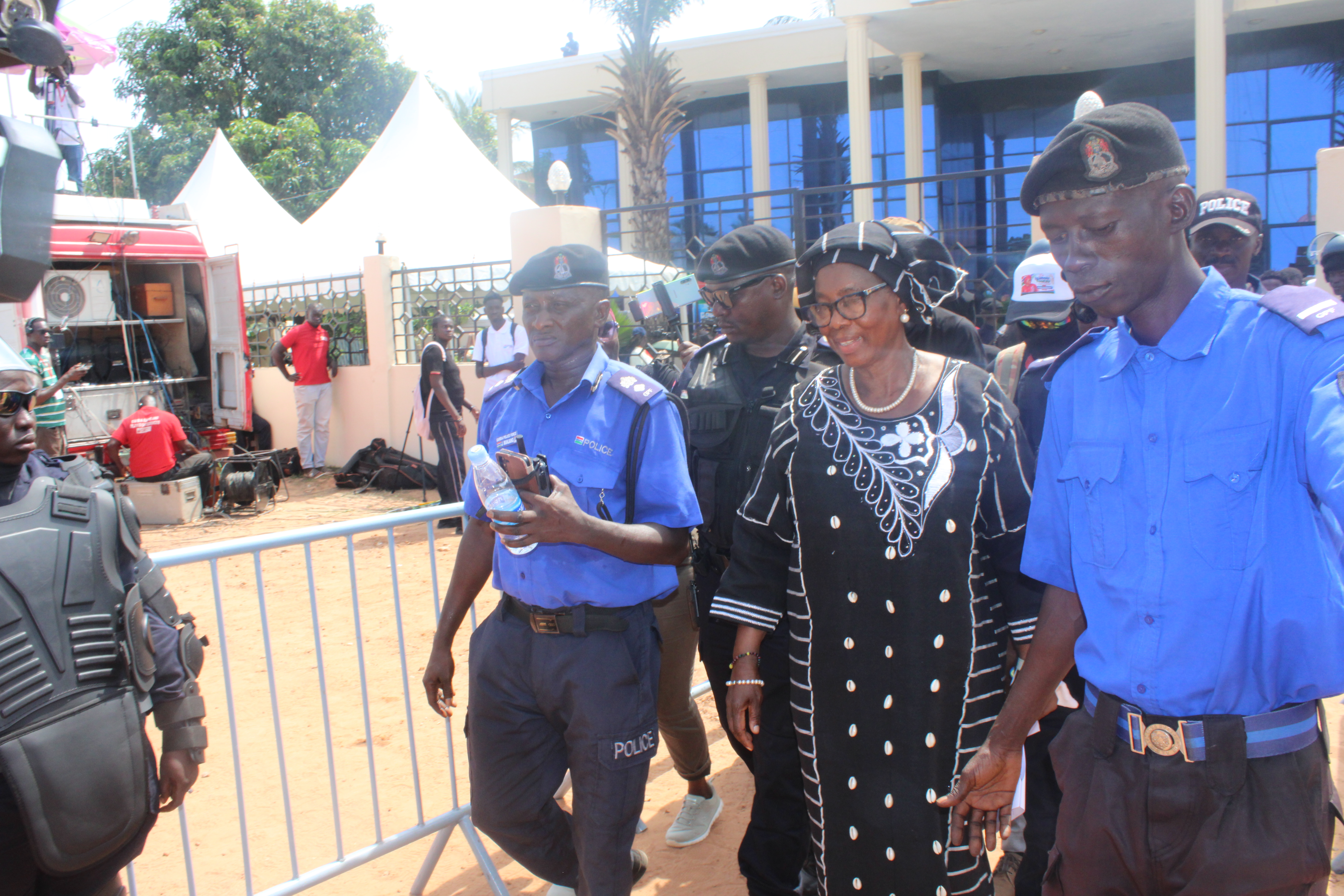
Former Vice President Dr Isatou Touray, the first female aspirant in the presidential race, also submitted her nomination documents on Wednesday, November 4.
Her arrival at the IEC headquarters attracted attention, with supporters accompanying her while carrying a broom as her campaign symbol. Some supporters chanted “Na dem” in Wolof, meaning “Let him go!”, as they expressed their support.
Speaking to journalists, Dr. Touray placed women's economic and political empowerment at the centre of her proposed agenda, arguing that despite their significant contributions to national development, women remain underrepresented in decision-making spaces.
She pledged to prioritise women's needs and ensure they have greater opportunities to participate in the country's economic and political development.
“Women play important roles in the country; however, they are underrepresented. If I am elected into power, I will make sure that the primary needs of women are met,” she said.
Her candidacy also attracted support from Olaye Jallow, who described her as a capable leader with the empathy and commitment needed to lead the country.
“Dr. Isatou Touray is capable of leading this country and taking it to the next level because she is a woman and has great empathy. She is here to support all the women. I am urging all the women of The Gambia to vote for her,” she said.
She further argued that the country's political history should make room for a woman to occupy the presidency.
“The first president of The Gambia was a man, likewise the second and third, so the fourth president should be a woman,” she added.
However, Dr Touray's nomination remained subject to submitting her school certificate, which was missing from the documents presented to the Commission. She was expected to provide the certificate to complete the process.
Sima Highlights Healthcare as Key Campaign Priority
Another aspirant, Modou Lamin Sima of the Alliance of Progressive
Citizens, also submitted his nomination papers to the IEC.
Referring to his party's manifesto, Sima highlighted healthcare as a major priority, drawing on his experience as a health-sector investor.
He pledged that, if elected, he would work towards ensuring adequate hospital beds and the availability of essential medicines, particularly for women and children.
His proposed focus reflects broader concerns about access to quality and affordable healthcare, especially for vulnerable groups.
Two Parties Withdraw from Nomination Process
Meanwhile, some political parties have also withdrawn from the nomination process.
The All-Inclusive Party and the Gambia Action Party (GAP) have informed the IEC of their decision not to participate in this year's nomination process.
The Gambia Action Party, founded by Musa Yalli Batchilly and headed by Ba Samba Drammeh, will therefore not be taking part in the December 5 presidential contest.
With the nomination process underway, aspirants' positions have begun to offer voters insight into the competing political visions ahead of the December polls.
From tackling the cost of living and rental challenges to constitutional reform, women's representation and healthcare delivery, the candidates have placed a range of national concerns at the centre of their proposed agendas.
However, beyond campaign promises, the coming weeks will be crucial in determining which aspirants satisfy the IEC's nomination requirements and ultimately qualify to contest the presidential election.
Author: Fatou C. Sanyang
Comments (0)
No comments yet. Be the first to comment!