
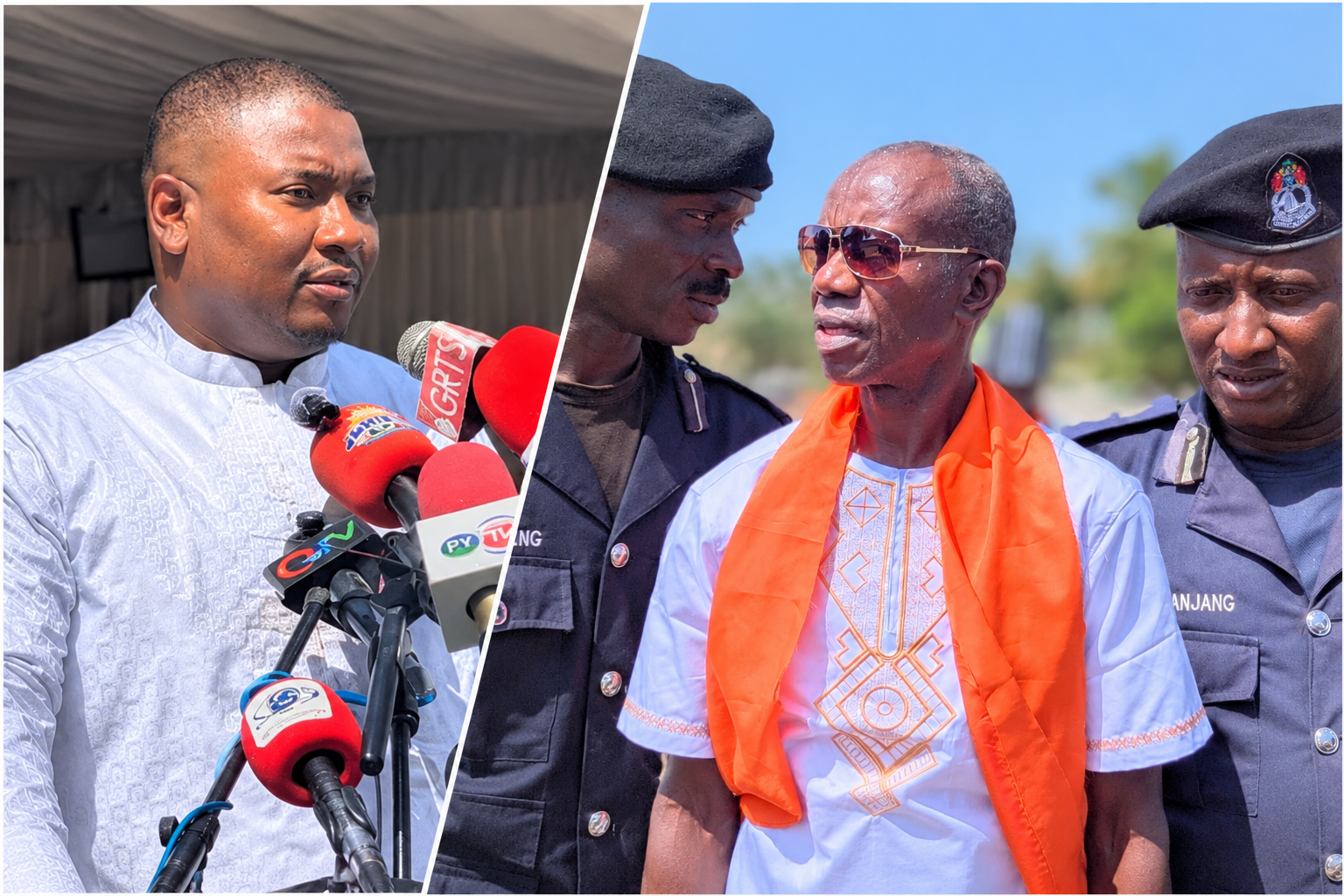
Speaking to journalists on Saturday, November 7, 2026, after submitting his nomination documents to the Independent Electoral Commission (IEC), Mr Bensouda expressed confidence that he would be cleared to contest the election.
“My candidacy is not under threat at all by the government White Paper. I am in no way disqualified, and inshallah, the IEC will do the needful, and I will be on the ballot,” he said.
He maintained that there was no legal basis for his disqualification, arguing that The Gambia remains a democratic country governed by the rule of law.
On governance and justice reforms, Mr Bensouda pledged to separate the Office of the Attorney General from the Ministry of Justice to guarantee greater independence and ensure justice is administered without fear or favour.
He also outlined UNITE’s 66-point agenda, describing it as a comprehensive roadmap for national transformation, poverty eradication and improved governance. According to him, all 66 priorities are achievable by 2031, when The Gambia celebrates 66 years of independence.
Addressing questions surrounding his nearly nine-year tenure as mayor of Kanifing Municipal Council and findings of the Local Government Commission of Inquiry, which are currently on appeal, Mr Bensouda described the issues as structural challenges within local government institutions rather than personal misconduct.
Meanwhile, former Justice Minister Joseph Joof has also entered the presidential nomination race, appearing at the IEC headquarters with traditional farming and cultural items.
The 66-year-old lawyer presented a local hoe and a traditionally woven fan, which he said symbolise agriculture and the everyday realities of Gambians.
Mr Joof said agriculture should be commercialised to improve livelihoods and strengthen the national economy, noting that farming remains a major source of income for many communities.
The former minister submitted some of his nomination documents but had yet to present proof of payment of the D1 million nomination deposit, explaining that he wanted to clarify certain details before making the payment.
The appearance of Mr Joof at the IEC, alongside Mr Bensouda’s nomination, adds to the growing activity surrounding the December 5 presidential election as aspirants continue their preparations to secure places on the ballot.
Author: Fatou C. Sanyang
Comments (0)
No comments yet. Be the first to comment!