
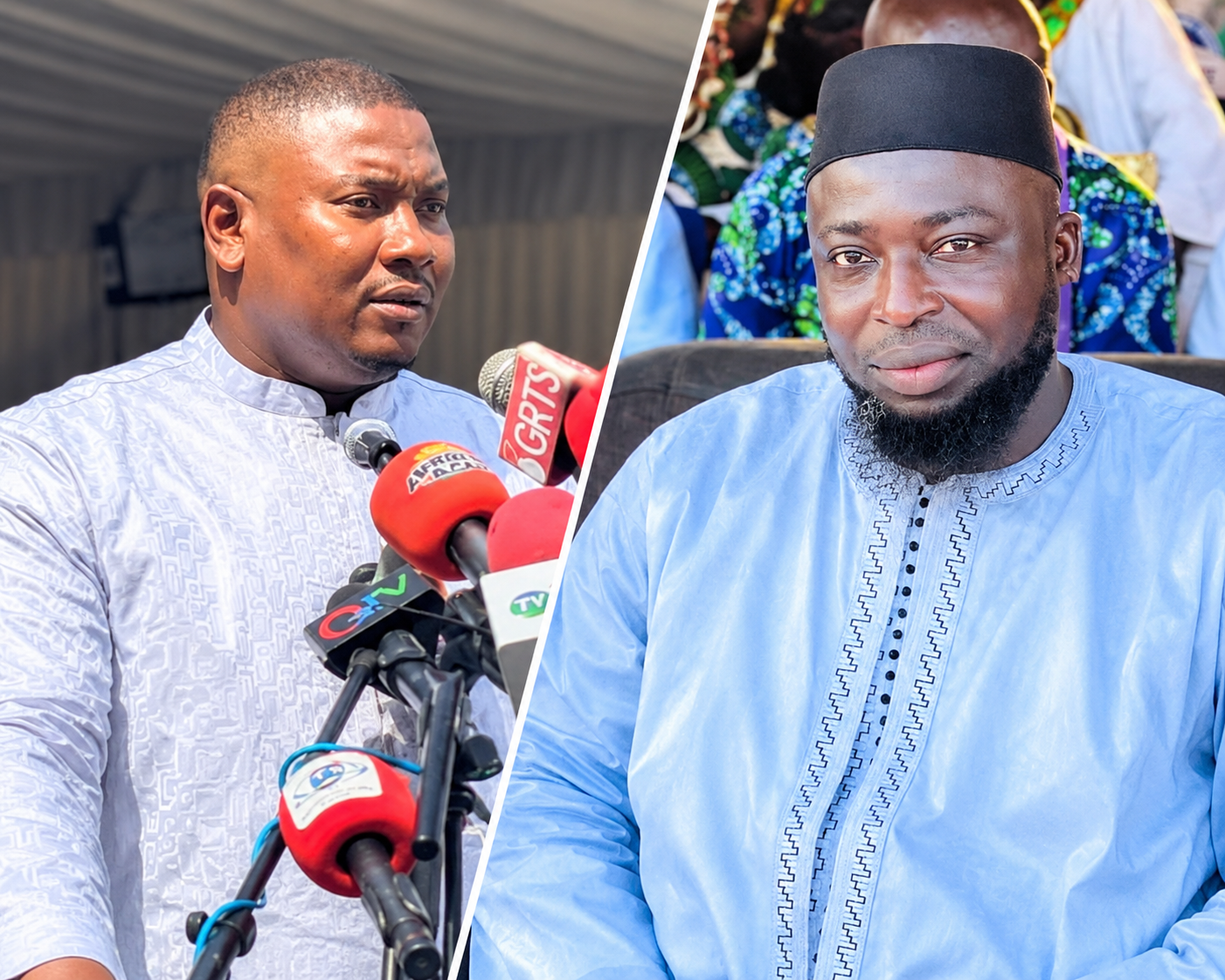
The two leaders made the call during campaign activities in the Upper River Region (URR), where they engaged with supporters ahead of The Gambia’s December 5, 2026, presidential election.
Speaking during the engagement, Almameh Gibba, presidential candidate for the No to Alliance for Development, said supporters must understand that political leaders are not enemies, noting that politicians maintain cordial relationships despite belonging to different political camps.
He explained that opposition leaders interact, share meals and engage with one another without hostility, urging supporters to demonstrate the same level of understanding and tolerance.
“Leaders are united,” he stressed, calling on supporters to emulate their leaders by embracing peaceful political engagement.
Gibba described the current political moment as a significant opportunity for the opposition, saying time was running out and expressing confidence that the December 5 election would bring a change in leadership. He further predicted that incumbent President Adama Barrow would lose the election.
Asked about the possibility of a coalition between his movement and Talib Ahmed Bensouda, Gibba neither confirmed nor ruled out such an arrangement, saying the direction of the campaign would determine what happens next.
“Well, we are on campaign, and the dictate of the campaign will tell. I cannot tell anything, but I am telling you that in December 2026, history will narrate that it is not Barrow,” he added.
Meanwhile, Talib Ahmed Bensouda, leader of the UNITE Party, highlighted what he described as the common reason bringing opposition leaders together: their desire to remove the incumbent government.
He argued that President Barrow's leadership was the central concern uniting opposition forces, accusing his administration of mismanaging the country's resources and failing to deliver on its promises.
Bensouda said the country's development remained inadequate despite years of governance, noting that many Gambians continued to struggle with economic difficulties.
He particularly highlighted youth unemployment, saying many young people remained without jobs, while others continued to embark on irregular migration journeys through the backway in search of better opportunities.
The UNITE leader maintained that opposition leaders had chosen national interest over personal political benefits, arguing that they could have joined the ruling party for individual gain but instead remained committed to challenging the government.
“We could have all joined the ruling party for our personal interest, but we refused to do that because we are patriots, and the interest of The Gambia comes first,” he said.
Both leaders' appeals for unity underscored the importance of peaceful political engagement and cooperation among opposition supporters as the country approaches the December 5 presidential election.
Author: Fatou S. Sanyang
Comments (1)