
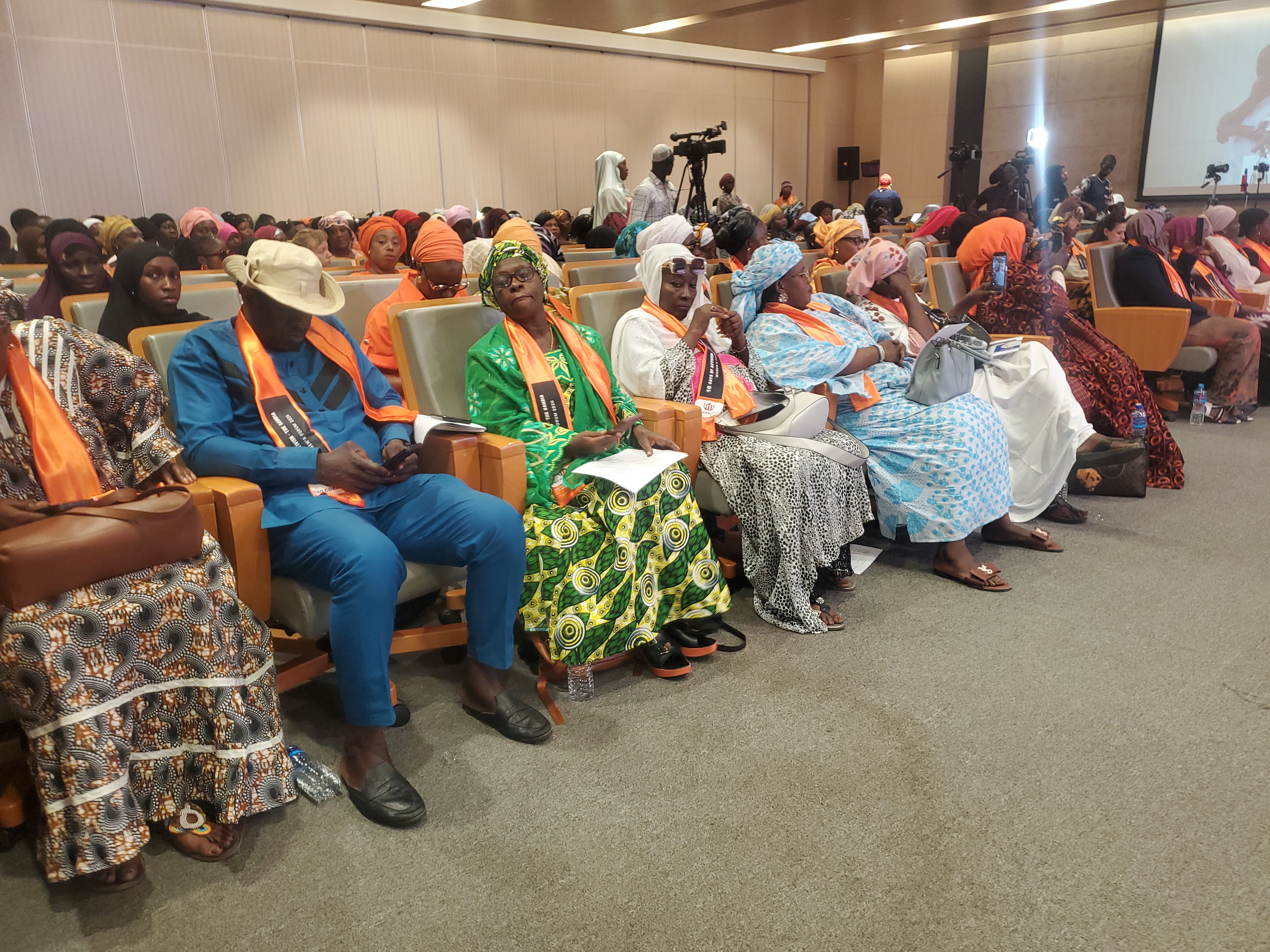
The demands were presented on Wednesday, November 25, during the Women's Forum and launch of the 16 Days of Activism Against Gender-Based Violence at the Sir Dawda Kairaba Jawara International Conference Centre in Bijilo, where women challenged candidates to translate their campaign promises on women’s rights into concrete action.
Under the theme, “Unite to End Violence Against Women and Girls: Ensure Justice, Protect Survivors, End Impunity,” the forum placed women's rights, protection and political inclusion at the centre of the electoral debate, urging candidates to commit to addressing longstanding challenges facing women and girls.
The first demand calls on the next government to protect the ban on Female Genital Mutilation (FGM) and strengthen existing laws and legal frameworks safeguarding women and girls. Participants stressed the importance of preserving hard-won protections against harmful practices and ensuring that the rights of women and girls remain protected.
The second demand focuses on justice and support for survivors of gender-based violence. Women called for a dedicated fund to support survivors, improved access to justice and adequate resources to ensure the Gender-Based Violence Court is fully functional and able to handle cases effectively and without unnecessary delays.
Their third demand is for at least 30 per cent women's representation in the National Assembly, Cabinet, local government structures and senior public appointments. Women argued that their significant participation in the electorate should be reflected in the institutions where decisions affecting their lives are made.
Chairperson of the CSO Coalition, Yadicon Njie Eribo, said the coalition was engaging the eight presidential candidates to secure clear commitments on women’s rights and protection. She stressed that legislation alone was not enough without proper enforcement, funding and support services.
Eribo called for increased funding for survivors, the expansion of referral centres and stronger support mechanisms, urging authorities to ensure that courts handling gender-based violence cases are functional and accessible to women seeking justice.
Fatou Baldeh, Chief Executive Officer of Women in Liberation and Leadership (WILL), reinforced the demand for 30 per cent representation, noting that women constitute more than 50 per cent of registered voters but remain underrepresented in the National Assembly and other decision-making institutions.
She said women’s participation in elections must translate into representation in governance, arguing that their numbers at the polls should be matched by a meaningful presence in leadership.
Tobaski Njie-Sarr, Country Director of the Westminster Foundation for Democracy, questioned why women, despite their numerical strength in the electorate, continued to lag in political representation.
She urged women to scrutinise political manifestos, monitor campaign promises and directly question candidates on how they intend to implement commitments on women's empowerment. She noted that political parties often include women’s issues in their manifestos, but implementation of existing laws remains a major concern.
Yama Samateh also called for greater women's participation in decision-making, arguing that women understand the challenges facing other women and should be represented in institutions where policies and laws are made.
She raised concerns about the barriers women face in politics, including discouragement, public attacks, slander and the withdrawal of family support, which she said can force aspiring female politicians to abandon their ambitions. She also highlighted the financial challenges of contesting elections independently, stressing the importance of women’s participation in political parties and structures.
Samateh challenged women to engage candidates directly and demand what they want, rather than accepting vague promises during campaign rallies.
Degen Jobe urged women to recognise their collective electoral power, noting that more than half of registered voters are women. Reflecting on the candidature of Dr Isatou Touray, The Gambia’s first female presidential candidate, she said women should draw lessons from her persistence and willingness to contest the highest political office.
Jobe encouraged women to use their voting strength to demand accountability from candidates who promise to empower them, while acknowledging that women have diverse interests and cannot necessarily be expected to support one candidate collectively.
The forum’s three demands place a clear challenge before the presidential candidates as the December 5 election approaches: protect women’s rights, ensure justice and support for survivors of violence, and move beyond promises to deliver meaningful representation for women in public office.
The women said commitments to gender equality must go beyond campaign rhetoric and translate into laws that are protected, justice systems that work, resources for survivors and opportunities for women to participate in leadership at every level of governance.
Author: Fatou C. Sanyang
Comments (0)
No comments yet. Be the first to comment!