
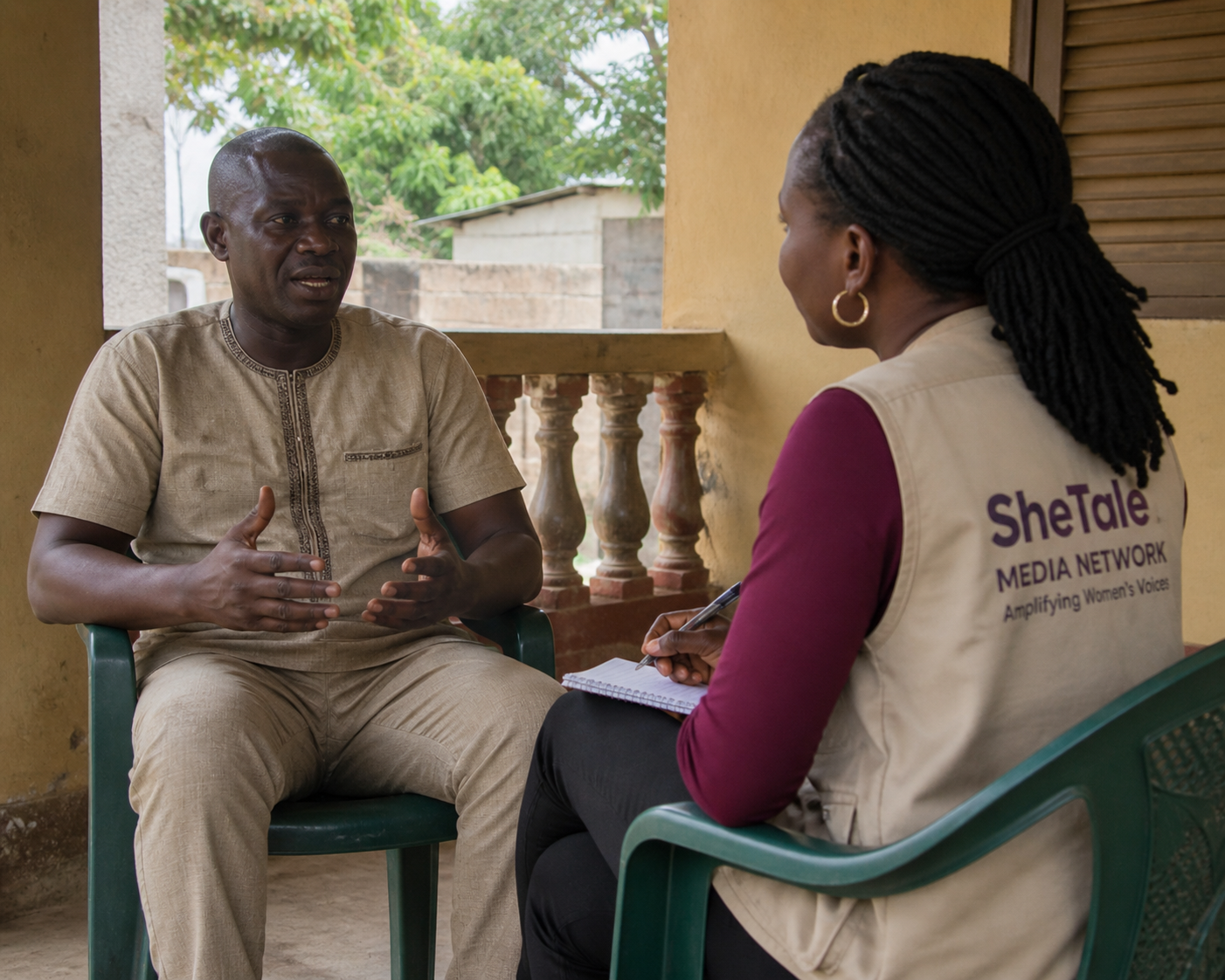
Sitting on a plastic chair at the veranda of his home on April 18, 2026, Joe reflects on how much has changed in just under two years. The Fathers Club, he explains, was formed shortly after a meeting with their National Assembly Member at the area council. Its goal was to strengthen families and guide both men and women in addressing issues affecting their homes.
“At first, there were many things we didn’t understand,” Joe says.
“But now, we understand a lot—and that has changed our thinking.”
One of the most significant changes has been the community’s evolving attitude toward FGM. For generations, the practice was seen as a cultural obligation. Young girls were taken into the bush, where parts of their reproductive organs were cut, often without an understanding of the health risks involved.
“Before, people did it because they didn’t know the complications,” Joe explains.
“Now we know it can cause serious harm.”
Through regular sensitisation meetings and open discussions led by the Fathers Club, men in the community have begun to confront the reality of FGM. The shift has not been immediate, but it has been noticeable. According to Joe, what was once nearly universal has dropped dramatically.
“If it was one hundred per cent before, now it is maybe two per cent,” he says. “And even then, it is done in secret.”
This secrecy reflects a deeper transformation—one driven not only by awareness but also by changing values. While elders once viewed FGM as an essential tradition, many in Joe’s generation now see it differently.
“It is affecting our girls,” he says firmly. “We cannot continue something that brings harm.”
The role of men in this transformation has been crucial. In many communities, FGM has long been considered a women’s issue. But Joe challenges that notion.
“As men, we are heads of our families,” he says. “We have a responsibility to guide and protect. We must talk to our wives and children and help them understand that this is harmful.”
Joe’s commitment is not just public—it is personal. Within his own family, he has taken a clear stand against FGM, ensuring that no girl under his care is subjected to the practice.
“I explained the risks to them,” he says. “Now, they understand, and they agree it should not happen.”
The Fathers Club has amplified voices like Joe’s, organising community outreach programs and encouraging open dialogue. These efforts have led to a growing number of success stories—families abandoning FGM and rethinking what it means to preserve culture.
At the same time, national efforts have reinforced these local changes. The 2015 law banning FGM in The Gambia has played a key role in curbing the practice. Joe acknowledges the impact of the legislation and fully supports it.
“The law is good,” he says. “It is there to protect our children.”
Yet challenges remain. Some individuals continue to practice FGM in secret, while others cross borders to evade the law. Despite this, Joe and his fellow Fathers Club members remain vigilant, determined to continue their advocacy.
“We know it is still happening,” he admits. “But we are working hard to stop it.”
As the conversation around FGM continues to evolve in Basse, one thing is clear: change is being driven not just by policies, but by people—fathers, families, and communities willing to question tradition and choose a different path.
Joe’s message to other men across the country is simple but urgent: “Do not support FGM. It is harmful. And we must follow the law.”
In Basse, that message is no longer just words—it is becoming a new way of life
This story is part of the "Breaking the Silence: Voices of FGM Survivors" podcast funded by the Foundation for Women's Health, Research and Development (FORWARD UK).
Author: Kaddy Sowe.
PC: AI-Generated
Comments (3)