
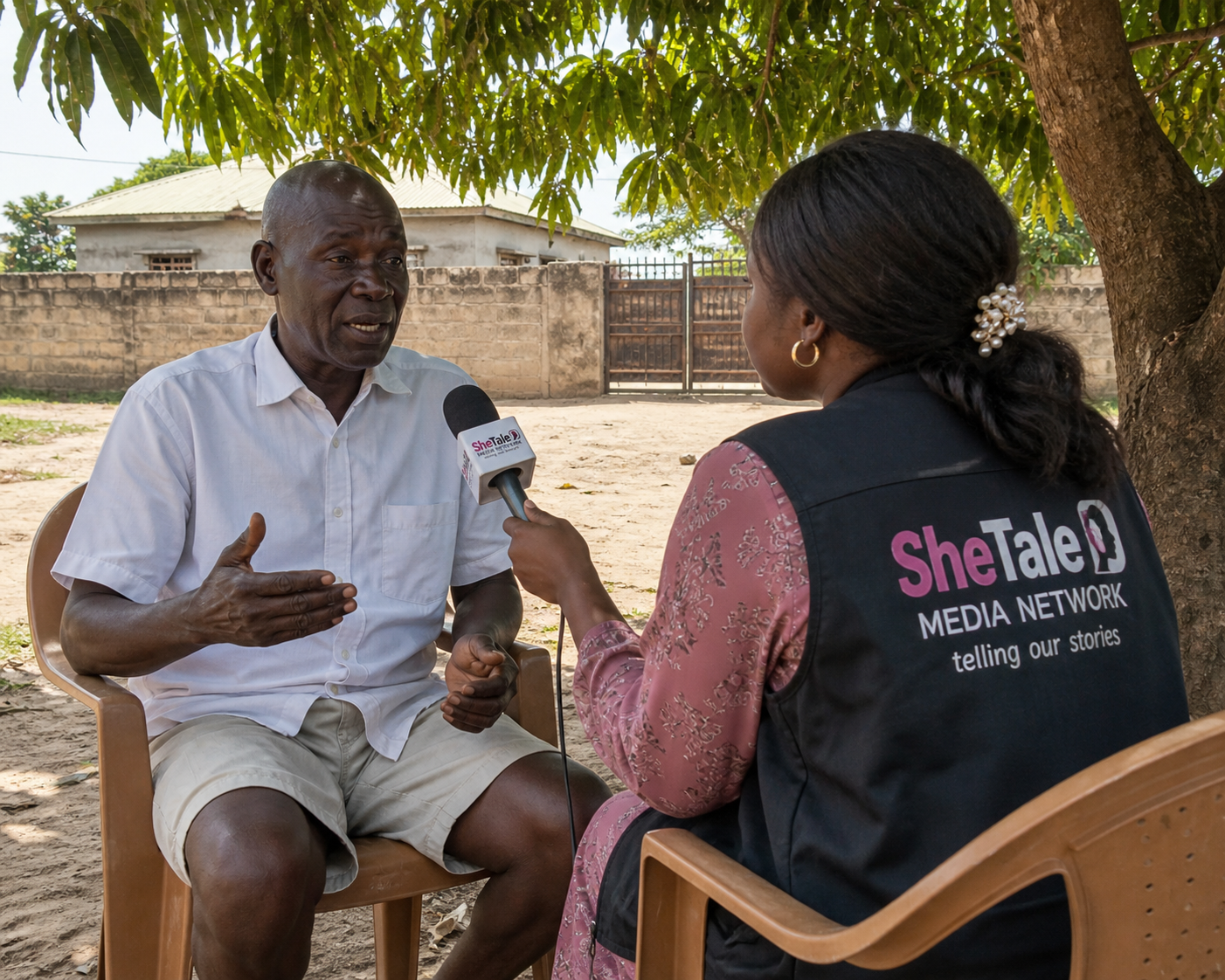
Speaking to this reporter on April 18, 2026, Essa said, “The Fathers Club is about uplifting each other, and we cannot do that if we don’t respect each other’s rights.”
For much of his life, however, Essa viewed Female Genital Mutilation (FGM) the way many in his community did—as a normal part of growing up. Like others, he heard it described as tradition, and sometimes even as a religious obligation.
“During my childhood, I believed it was something that should be done,” he recalls. “That was how I was raised.”
That belief began to change when he became involved in the Fathers
Club. Through trainings and discussions, he gained a deeper understanding of the practice and its consequences.
“That is when I realised it causes harm to women,” he says. “And when something causes harm, we must rethink it.”
Today, Essa is among those leading efforts to share that understanding with others—moving from passive acceptance to active advocacy. He speaks with families, neighbours, and community members, encouraging them to reflect on long-held beliefs.
“If you have knowledge and you don’t share it, it has no use,” he says. “So, we sit with our families and talk about it.”
These conversations, however, are not always easy. For years, FGM was treated as a private matter—something not to be discussed openly, especially between men and women within the same household.
“People feel shy,” Essa explains. “Some hide their faces or avoid the discussion completely.”
But that silence is beginning to break.
Through community outreach and radio programs, more people are finding the courage to speak. Where listeners once remained quiet, they now call in to share their thoughts, ask questions, and offer suggestions.
“Before, people would not talk about it,” he says. “Now they are beginning to open up.”
Essa believes this shift is rooted in growing awareness—and in the inclusion of men in the conversation. While FGM is often seen as a women’s issue, he strongly disagrees.
“Men and women are both part of the family,” he says. “It is not right for women alone to decide, and it is not right for men alone to decide. We must support each other.”
He sees men not as outsiders, but as essential partners—especially in guiding family decisions and protecting daughters.
In his own community, Essa has witnessed the real-life consequences of FGM. He recalls cases where women experienced severe complications, reinforcing his conviction that the practice must end.
“These are not just beliefs,” he says. “These are things we have seen.”
In response, he and other Fathers Club members have stepped up their efforts—not only raising awareness about the health risks, but also informing people about the legal consequences of continuing the practice.
Still, Essa believes that laws alone are not enough.
“The law is good,” he says. “But what is more important is understanding.”
For him, lasting change comes from within—from individuals and families making informed decisions based on knowledge rather than fear or pressure.
“When people understand, they can stop without force,” he explains. “They stop because they choose to.”
That is why he advocates for grassroots engagement—radio discussions, community meetings, and “bantaba” dialogues where people can speak freely and learn from one another.
At the heart of his message is a call to rethink tradition.
“If it is tradition, let us keep the good ones,” he says. “But we must let go of those who harm our health.”
Essa’s approach is not confrontational—it is conversational. He believes change cannot be forced through arguments or conflict, but through patience and dialogue.
“Anything can be solved through discussion,” he says. “Not through fighting or quarrelling.”
In Basse Santo-Su, that belief is taking root. Families are beginning to talk openly, men are stepping into conversations once considered off-limits, and communities are slowly redefining what it means to protect their daughters.
For Essa Kanuteh, the journey is far from over. But each conversation, each shared piece of knowledge, is a step forward.
And in a place where silence once prevailed, dialogue is becoming the most powerful tool for change.
This story is part of the "Breaking the Silence: Voices of FGM Survivors" podcast funded by the Foundation for Women's Health, Research and Development (FORWARD UK).
Author: Fatou S. Sanyang
PC: AI-Generated
Comments (0)
No comments yet. Be the first to comment!