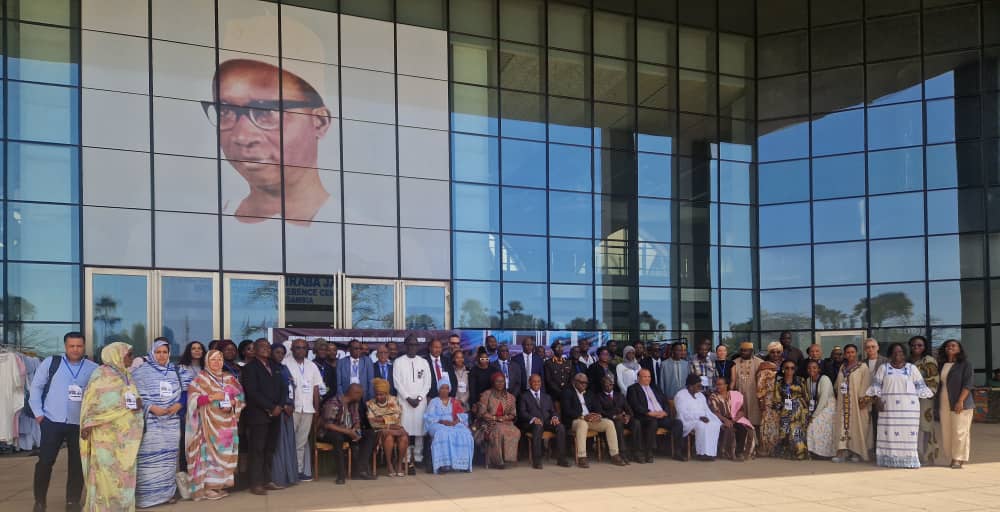
Gathered at the Sir Dawda Kairaba Jawara International Conference Centre for the Forum on the Participation of NGOs in the 87th Session of the African Commission on Human and Peoples’ Rights (ACHPR), delegates are using the platform to amplify calls for safe water access, improved sanitation systems, and the protection of human dignity across Africa.
Held from 7th to 9th May 2026 under the theme “Assuring Sustainable Water Availability and Safe Sanitation Systems to Achieve the Goals of Agenda 2063,” the forum has placed the spotlight on the millions of Africans who still lack access to clean drinking water and adequate sanitation — challenges participants say are not only development concerns, but fundamental human rights issues.
Organised and hosted by the African Centre for Democracy and Human Rights Studies (ACDHRS), this year’s theme, “Assuring Sustainable Water Availability and Safe Sanitation Systems to Achieve the Goals of Agenda 2063,” framed the discussions not simply as a development issue, but as a fundamental human rights concern.
Across Africa, millions of people still walk long distances to fetch water, rely on unsafe water sources, or live without proper sanitation facilities. In many rural communities and overcrowded urban settlements, women and children bear the heaviest burden. The consequences are visible in rising health problems, disrupted education, food insecurity, and deepening poverty.
Inside the conference hall, speakers repeatedly stressed that access to clean water and safe sanitation should no longer be treated as a privilege.
Opening the forum, Litha Musyimi-Ogana described the NGO Forum as an essential voice in Africa’s human rights movement.
Delivering remarks on behalf of the Chairperson of the African Commission, she emphasised that civil society organisations remain central to protecting vulnerable communities and ensuring accountability across the continent.
“The NGO Forum is not merely a precursor to the sessions of the Commission,” she said. “It is, in many ways, the conscience of our human rights system.”
Her words resonated strongly in a room filled with activists and organisations working directly with communities affected by water shortages, conflict, climate change, and weak public infrastructure.
Commissioner Musyimi-Ogana noted that water and sanitation are deeply connected to human dignity, public health, education, and economic opportunity. Without reliable access to these basic services, she warned, Africa’s broader development aspirations under Agenda 2063 would remain difficult to achieve.
The forum also provided space for reflection on the widening inequalities across the continent.
For Hannah Forster, Executive Director of the African Centre for Democracy and Human Rights Studies, the timing of the discussions could not be more important.
Standing before delegates, she painted a picture of a continent grappling with overlapping crises — insecurity, displacement, conflict, weak healthcare systems, and growing inequality — all of which directly affect access to water and sanitation.
“Our discussions are taking place at a time when Africa continues to face widespread inequity, conflict, displacement, and insecurity,” she stated.
Her remarks highlighted how communities displaced by violence and instability often lose access to clean water and sanitation services first, exposing already vulnerable populations to disease outbreaks and further hardship.
Across parts of the Sahel, Sudan, the Horn of Africa, and eastern Democratic Republic of Congo, conflict has destroyed public infrastructure and weakened already fragile systems. Climate change has also intensified droughts and water scarcity in many regions, creating additional pressure on governments and humanitarian agencies.
While the forum’s central theme focused on water and sanitation, conversations quickly expanded into broader concerns about governance, democracy, and shrinking civic space across Africa.
Naji Moulay Lahsen delivered one of the forum’s most direct and emotional speeches, warning that attacks on human rights defenders and civil society organisations continue to threaten democratic progress on the continent.
“This forum is and must remain a vital space to openly discuss, analyze, and address pressing human rights violations in Africa,” he said.
He stressed that the forum would continue to provide an open platform for difficult conversations, regardless of political sensitivities.
“There is no taboo in this NGO Forum,” he declared. “Here, we speak truth without fear, hold power accountable, and work toward advancing human dignity across our continent.”
Mr. Lahsen criticised what he described as the misuse of anti-terrorism laws in some African countries to silence journalists, activists, bloggers, and organisations advocating for fundamental freedoms.
He warned that shrinking civic space ultimately weakens efforts to address critical social issues, including access to essential services such as water, healthcare, and sanitation.
As delegates listened, the realities facing many African communities became impossible to ignore.
In some regions, women spend hours every day searching for water instead of attending school or engaging in income-generating activities. In overcrowded informal settlements, poor sanitation systems contribute to preventable diseases that disproportionately affect children. In conflict zones, damaged water infrastructure leaves entire populations dependent on humanitarian aid.
Speakers throughout the forum repeatedly stressed that achieving sustainable development requires more than policy declarations. It demands investment, accountability, and inclusive governance.
Mabassa Fall called for stronger cooperation between governments, international partners, and civil society organisations to address the continent’s growing challenges.
“We must return to multilateralism, which guarantees peace, stability, and respect for the rights of peoples and nations,” he stated.
The message of collaboration was echoed by Malamin Tamba, speaking on behalf of the United Nations Office for West Africa and the Sahel.
He reaffirmed the United Nations’ commitment to supporting peacebuilding, good governance, and human rights efforts across the region.
“UNOWAS remains committed to working with all stakeholders in the search for preventive solutions to conflicts and crises, while promoting good governance, the rule of law, and respect for human rights in West Africa and the Sahel,” Mr. Tamba said.
Beyond the speeches and formal sessions, the forum reflected a deeper reality about Africa’s development journey.
Water — something often taken for granted in other parts of the world — remains a daily struggle for millions. Safe sanitation, equally essential to human dignity and public health, remains out of reach for many communities.
For participants gathered in Banjul, the challenge is no longer about identifying the problems. The challenge is ensuring that governments, regional institutions, and development partners move from commitments to concrete action.
As discussions continue during the NGO Forum and the 87th Session of the African Commission on Human and Peoples’ Rights, delegates hope the conversations in The Gambia will help shape stronger continental policies that place human dignity, equality, and access to basic services at the centre of Africa’s future.
Because for many communities across the continent, the struggle for clean water is also a struggle for justice, health, and human rights.
Author: Halimatou Ceesay
PC: Group Photo
Comments (0)
No comments yet. Be the first to comment!