
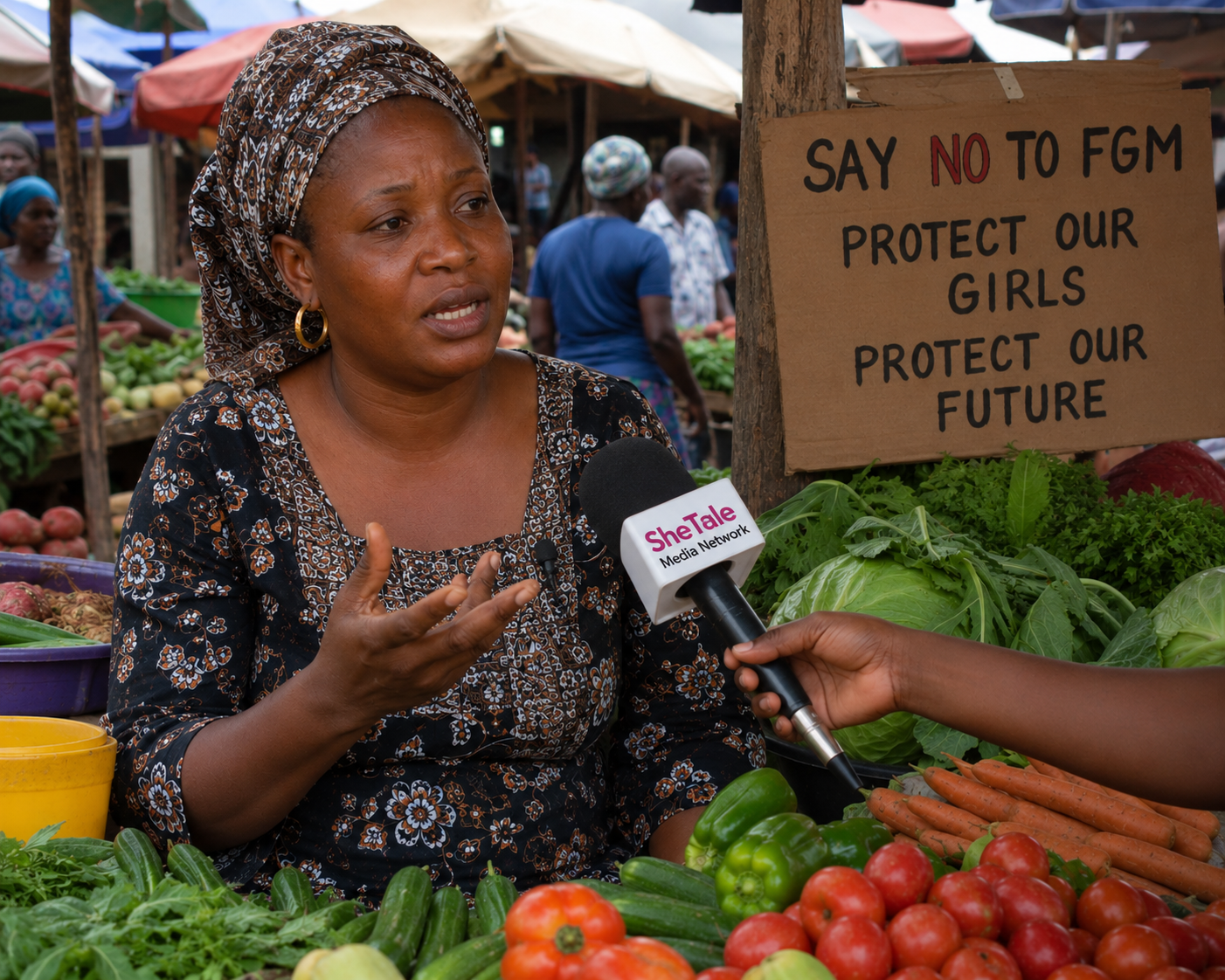
Born and raised in Basse, Jarri grew up believing FGM was a normal tradition every girl was expected to go through.
Speaking to this reporter in April 2026, Jarri said, “My personal understanding of FGM is that it is a tradition performed on girls.
Growing up in my community and in the society I lived in, FGM was viewed as something that should be practised on every female child.”
But as she grew older, Jarri began to question the practice and the suffering many women silently endured after undergoing it.
“I started questioning FGM when I heard people say that girls who go through the practice may experience marriage differently from girls who have not,” she explains. “That is where I saw the difference, especially among Wolof communities where many people do not practice FGM.”
While the practice is mostly discussed as a women’s issue, Jarri believes men should also be part of the conversation because the effects of FGM continue long after marriage.
“Men should be involved because when women face complications, it affects their husbands too,” she says. “Marriage is between two people, so whatever harms women also affects men directly or indirectly.”
As customers stop briefly at her vegetable stall, Jarri continues sharing painful realities she has witnessed in her community.
“Some women are sealed, and when they get married, they have to be opened before their husbands can have contact with them,” she says softly. “I have seen people go through this, and others who did not.”
To her, the dangers of FGM go beyond pain. She worries about the unsafe conditions under which the practice is often performed.
“One knife is sometimes used on many girls,” she explains. “If one person has an infection, it can spread to others. That makes the practice very harmful.”
Jarri, a mother of two boys, says that if she ever has a daughter, she would never allow her to undergo FGM.
“I do not want my child to experience such harm,” she says firmly. “This is not a good tradition because it causes more harm than good.”
She also points to neighbouring Senegal, where stronger enforcement against FGM has reduced the public practice of cutting.
“In Senegal, people can face imprisonment if they are caught performing FGM,” she says.
Before returning to attend to her customers, Jarri leaves a message for parents and fathers across communities:
“If you do not want your daughters to suffer, then do not allow them to go through this practice. Parents should protect their daughters and keep them safe.”
This story is part of the "Breaking the Silence: Voices of FGM Survivors" podcast funded by the Foundation for Women's Health, Research and Development (FORWARD UK).
Author: Kaddy Sowe
PC: AI-Generated
Comments (0)
No comments yet. Be the first to comment!