
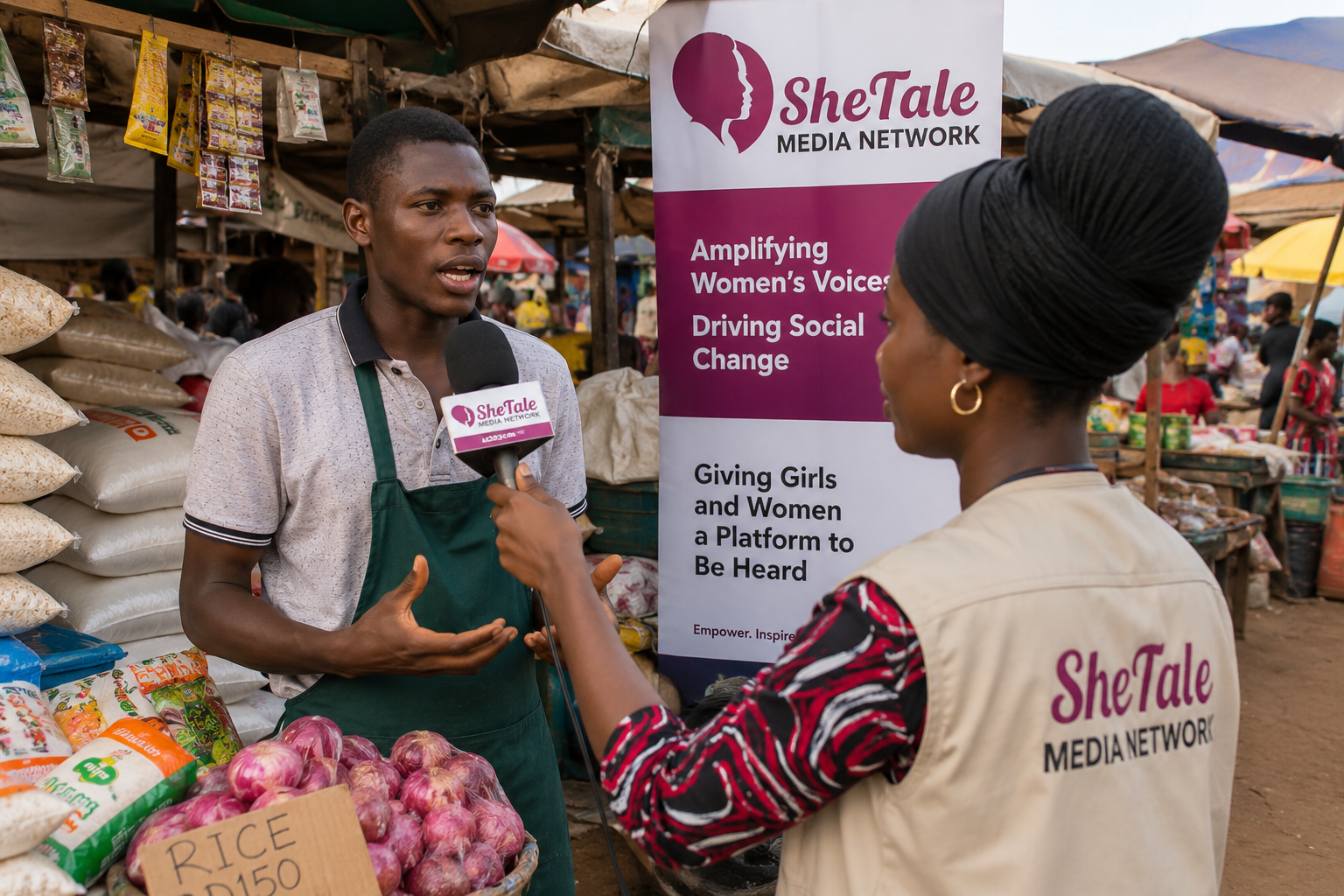
“My personal understanding of FGM is that it is a tradition, but not one that should be practised by force,” Modou explained during an interview in April, 2026 at the market.
Growing up in Basse, he witnessed families making different choices about the practice. Some believed it was necessary to maintain culture and tradition, while others quietly rejected it.
“Those who supported it said it only involves removing a small part of the female reproductive system,” he said. At the time, he accepted those explanations without fully understanding the consequences many women and girls face after undergoing the practice.
His views began to change when debates surrounding FGM reached the National Assembly. Public discussions and awareness campaigns exposed him to information about the health risks and emotional trauma associated with the practice.
“Before that, I heard people say it was not good, but I did not believe it,” he admitted. “When it became a national discussion, I began to understand that it has harmful effects.”
Since then, Modou has used conversations at the market, within his family, and in his community to encourage people to abandon the practice.
Modou strongly believes that men should be involved in conversations about FGM because they often play important roles in family decision-making. His advocacy has already influenced members of his own family. He successfully convinced his brother, who lives in Germany, not to allow his daughter to undergo FGM. He also persuaded his sister to change her mind after she planned for her daughter to be circumcised.
“I explained that it is harmful and can lead to complications during childbirth,” he said.
Although he has seen progress, Modou admits that challenging tradition comes with difficulties. Many elders criticise his views, insisting that FGM is part of culture and religion. However, he continues to engage in community discussions, radio talk shows, and awareness meetings aimed at educating people about the dangers of the practice.
He recalled how one woman in Basse Kabakama, who previously performed FGM, reportedly stopped after several conversations with community advocates.
For Modou, ending FGM will require patience, education, and support from both the government and civil society organisations. He believes many rural communities still lack access to important information because not everyone listens to the radio or watches television.
“Community sensitisation and training are very important,” he emphasised.
As he continues selling foodstuffs at the bustling market, Modou Jaiteh hopes his voice, along with those of other young advocates, will help protect future generations of girls from harmful traditional practices.
This story is part of the "Breaking the Silence: Voices of FGM Survivors" podcast funded by the Foundation for Women's Health, Research and Development (FORWARD UK).
Author: Kaddy Sowe
PC: AI-Generated
Comments (0)
No comments yet. Be the first to comment!